AI courses for beginners: how to choose without hype
Vlad Voronezhtsev · · 6 min read

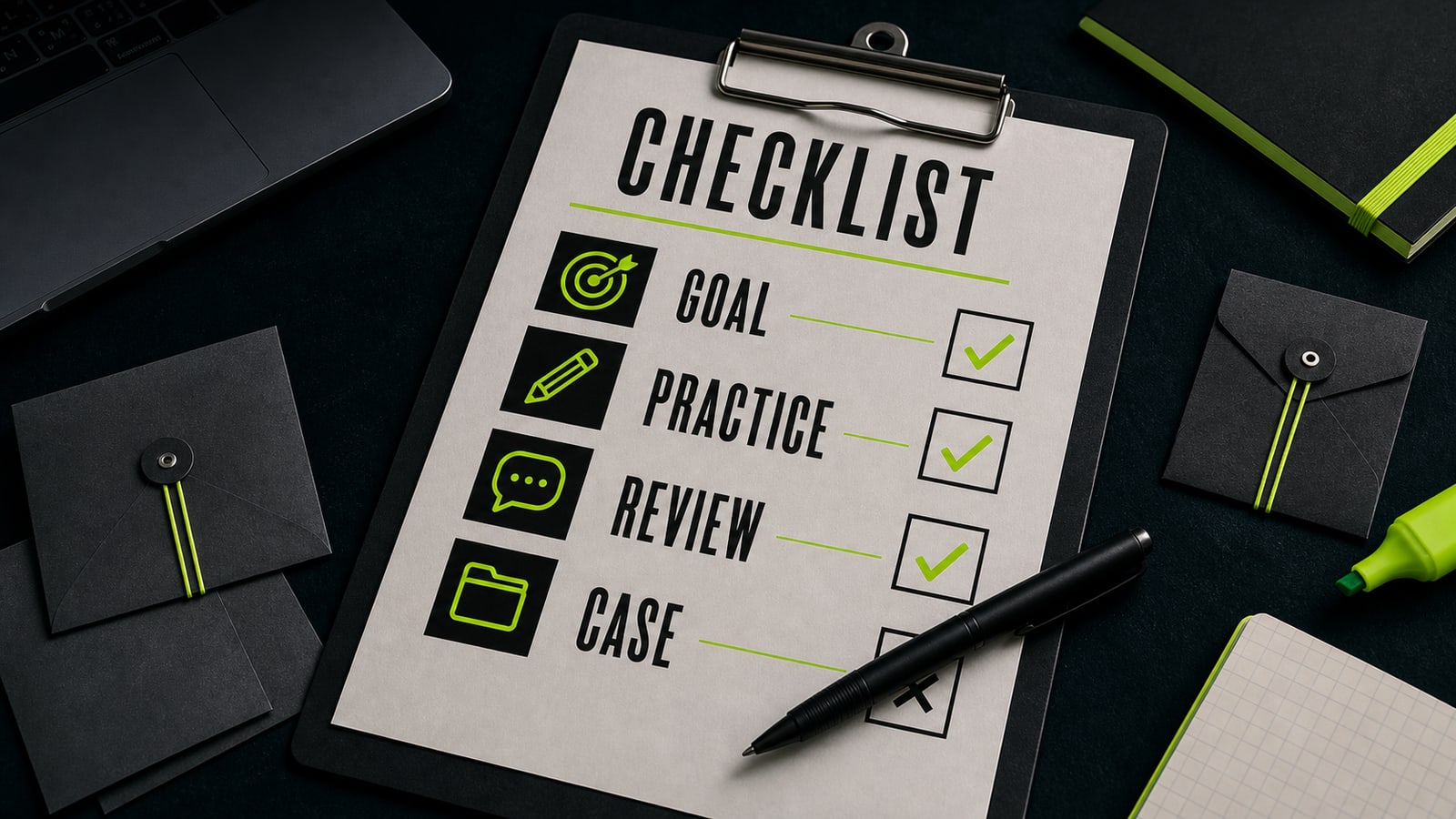
AI courses should be judged by practical output, not promises of a new career in a week. A useful program teaches you to frame a task, write a prompt, review the answer, and package a portfolio case. If the course produces only notes, the skill does not stick.
- 1.
Start with the result you want from an AI course
Before you pay for a course, define one result you want within 7-14 days: a presentation, landing page, product card, video, post series, or prompt workflow. If the program promises «everything about AI» but never says what you'll build with your own hands, progress becomes hard to measure. Practical case: a specialist was choosing between a large «AI expert career» program and practical Opten lessons. Instead of buying the whole package, he picked one output: a landing page for a test product. The first ChatGPT prompt was weak: «make a landing page structure for a course». The fix added the audience, product, page blocks, a ban on income promises, and a quality bar. One evening later, he had a page draft, not just a tool list.
Before
I want to take AI courses. Tell me what to choose so I can quickly understand everything.
After
Learning goal: build one landing page for a test product in a week. Need page structure, block copy, visual brief, and revision list. Quality bar: the case can be shown as a portfolio draft.
- 2.
Red flags in AI courses online
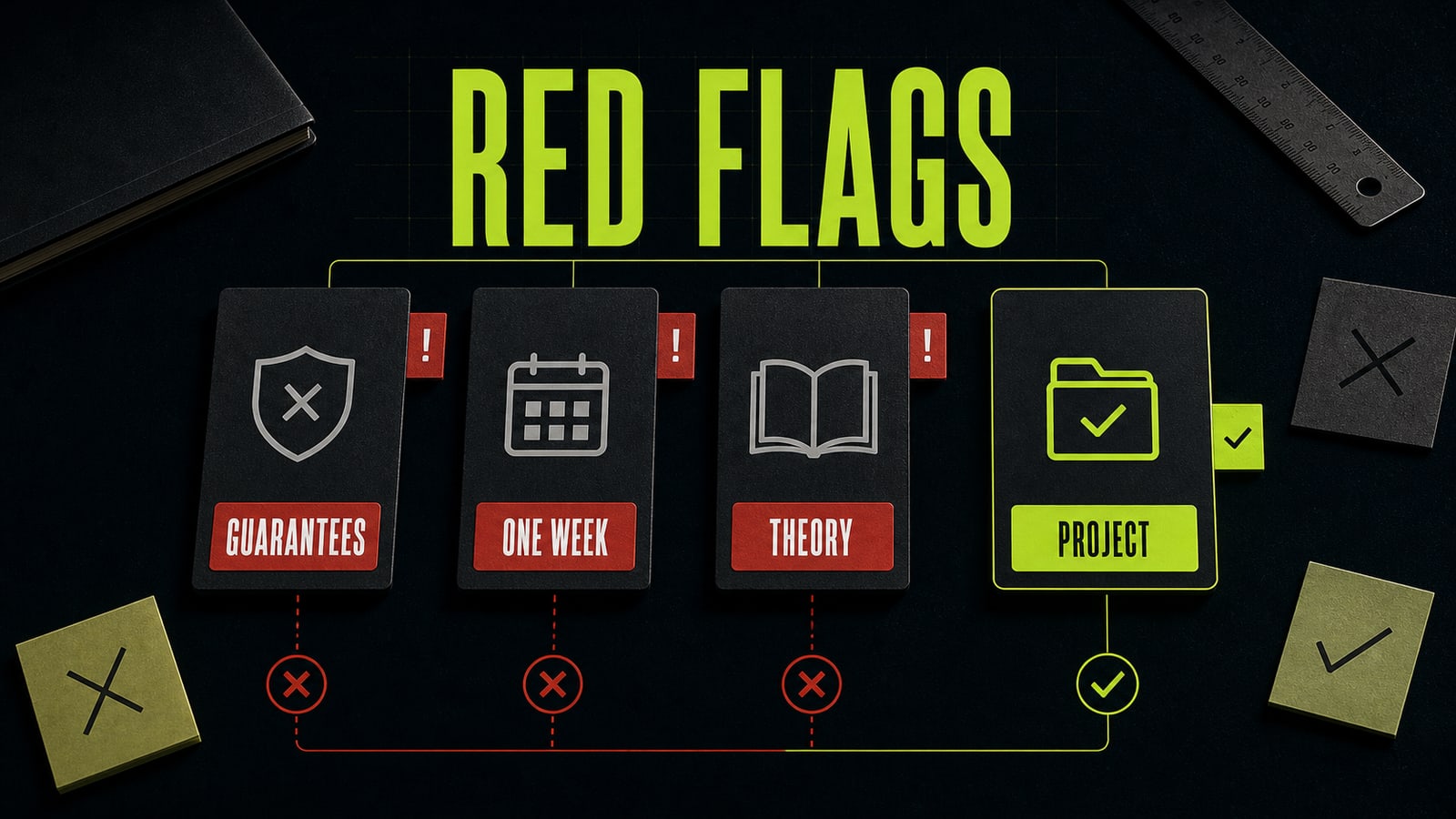
Strong AI courses online don't sell guaranteed employment, a certificate in place of skill, or a new profession in a week. They explain which tasks you'll learn, where practice matters, and what the models still can't do well. A red flag is a long sequence of overview lessons with no homework, review, or final project. Don't search for the «best AI courses» as if one ranking fits everyone. For a beginner, the right course depends on the task: writing, visuals, presentations, video, marketplace content, or websites. Compare the structure instead of the promise: how much practice, how the output is reviewed, whether the workflow repeats, and whether you'll finish a small case.
Before
The course promises a new career in a week, a certificate, secret tools, and fast income.
After
I check the program: what I build by hand, who reviews it, what final artifact I get, and where the limits are stated.
- 3.
What a practical AI course should include
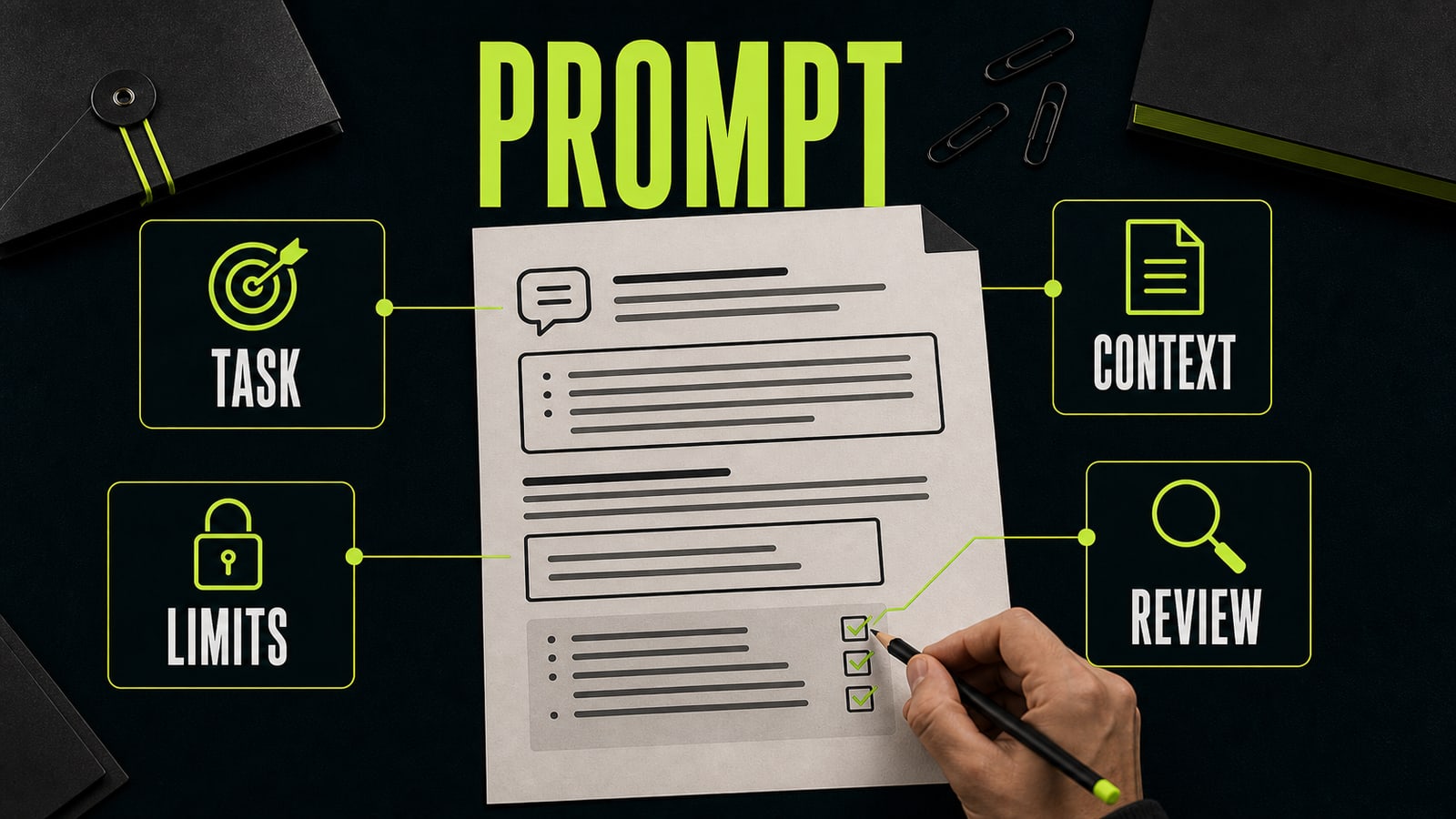
A good AI course is more than a tool list. It should cover task framing, context, prompt writing, constraints, output review, iteration, and packaging the result. A model can produce a draft fast, but quality appears when the learner can explain the goal, audience, format, and quality bar. The minimum practice set: one text case, one visual brief, one presentation or landing page, one exercise for fixing a weak prompt, and final result packaging. Opten helps at the preflight stage: it can catch a missing role, format, constraint, or quality bar before you spend generation attempts.
Before
Program: ChatGPT overview, image generator overview, video overview, automation overview.
After
Program: task, prompt, first error, fix, output review, final case, and a short portfolio note.
- 4.
A portfolio case beats a polished certificate
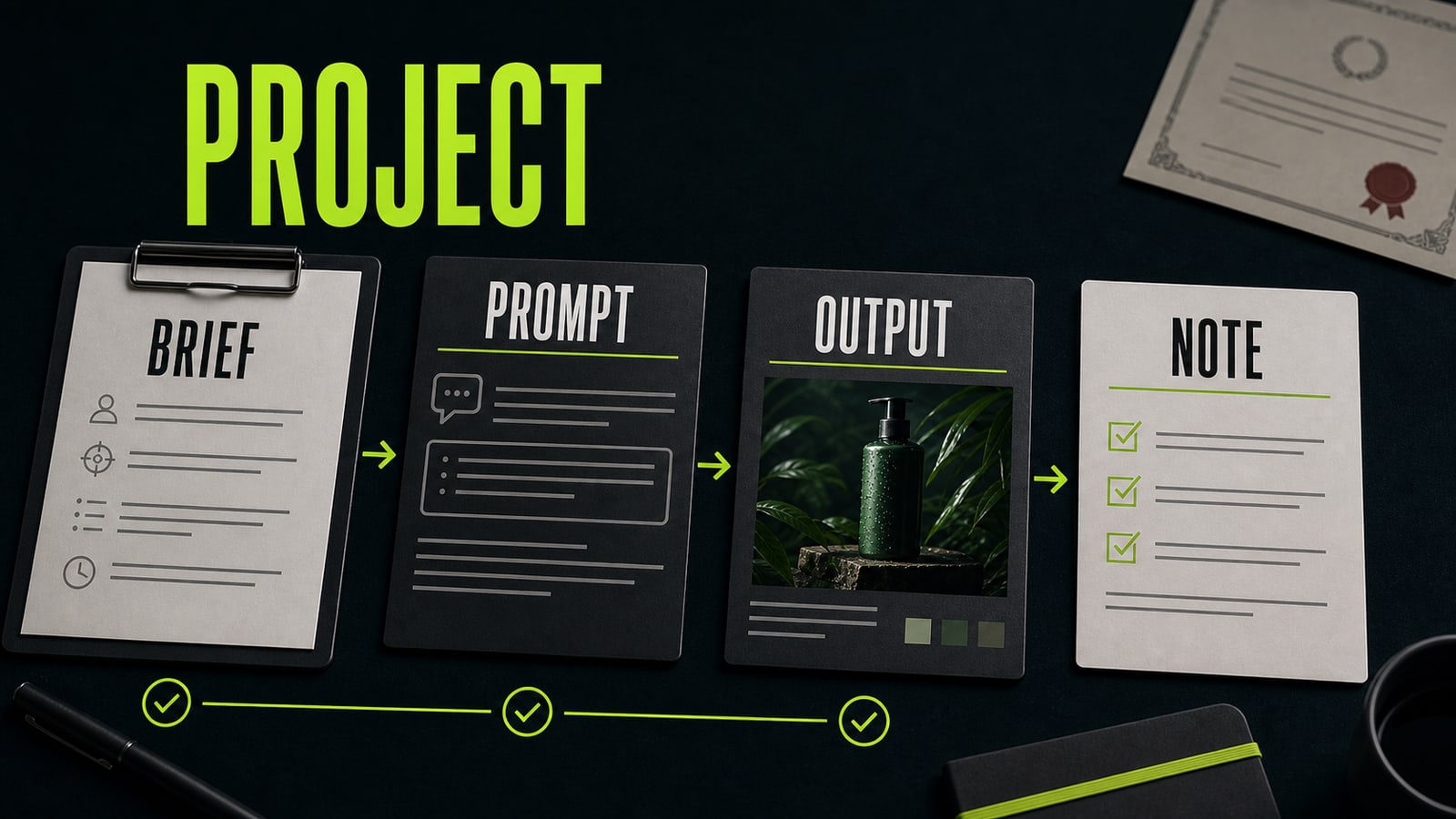
A certificate can prove that you attended. For work, freelance, or an internal project, the better proof is an artifact: the original task, prompt, first error, prompt fix, and final output. That shows you can move an AI task from idea to result instead of just watching lessons. If budget is tight, start with free Opten lessons in Learn: choose one scenario and build a mini-case. Paid AI courses for beginners make sense once you know which result you want to repeat and where you need feedback, structure, or depth.
Before
After the course I have notes, a certificate, and a list of tools, but no result I can show.
After
After learning I have a case: task, prompt, error, fix, final artifact, and notes for the next project.