
AI freelance services: 7 practical offers for beginners
Vlad Voronezhtsev · · 8 min read

AI freelance services are easier to sell when they promise a small, reviewable deliverable instead of vague “AI expertise.” A beginner can start with a presentation outline, edited copy, product cards, a landing page draft, or a short video cut. Pick one offer, build three practice cases, set the boundaries, then look for small projects.
- 1.
Sell a deliverable, not access to AI tools
Clients rarely need someone who simply knows ChatGPT or an image generator. They need a result: a deck for a meeting, ten catalog cards, a week of social copy, or a short video cut from supplied footage. Define an AI freelance service through the deliverable, turnaround, required inputs, and number of revisions. Compare two offers. “I make content with AI” gives the buyer nothing to scope. “I’ll create a presentation outline for up to 10 slides, draft the copy, suggest a visual direction, and include one revision round using your source material” can be reviewed and priced. The tools stay inside your process; the client buys a clear handoff. State exclusions early. If you don’t verify legal claims, create a full brand identity, or connect website payments, put that in writing before the project begins. A narrow offer you can finish is more useful than a large promise you can’t control.
Before
I can make any kind of content with AI.
After
I’ll create a presentation outline for up to 10 slides from your verified materials: structure, copy draft, visual direction, and one revision round.
- 2.
Choose one of seven beginner-friendly services
Good first projects have a small scope and a visible finish line. Seven useful options are presentation structure and draft slides; editing an email, post, or landing page; product cards from supplied photos and facts; a simple landing page prototype; short clips from client footage; a content pack made from one interview; and a research summary with links to every source. Don’t launch all seven offers. Start with work you already understand without AI. If you can shape a story, try presentations. If weak wording bothers you, offer editing. If you know product catalogs, build product cards. AI speeds up the first pass, but your existing judgment determines whether the delivery is useful. Beginner freelancing is safer when the client can review and correct the artifact quickly. Projects involving payments, personal data, medical advice, or legal conclusions carry different risks and shouldn’t be treated as practice jobs.
Before
I offer copy, design, video, websites, research, and automation.
After
My first offer is presentation structure plus a visual draft for small businesses using the client’s source material.
- 3.
Test the offer against one realistic lead
If you’re unsure where to begin, take one common task from an industry you know and reduce it to a measurable handoff. What does the client supply? What will they receive? How many options and revision rounds are included? What marks the project complete? These questions reveal when an offer is still too broad. Suppose a neighborhood café needs a presentation for a landlord. The owner supplies the concept, menu, photos, and verified numbers. The freelancer creates an eight-slide story, draft headlines, visual suggestions, and a list of missing facts. They don’t invent revenue, lease terms, or testimonials. That’s a bounded lead you can estimate before starting. Run the same process on a practice project and time the whole cycle: intake, generation, manual editing, messages, export, and revisions. Extra income comes from a process you can repeat without losing control, not from the number of models you have open.
Before
I can quickly make a complete presentation for any business.
After
I’ll create an outline for up to 8 slides from the café’s materials: story, draft headlines, visual ideas, missing-fact list, and one revision round.
- 4.
Build three portfolio cases before outreach
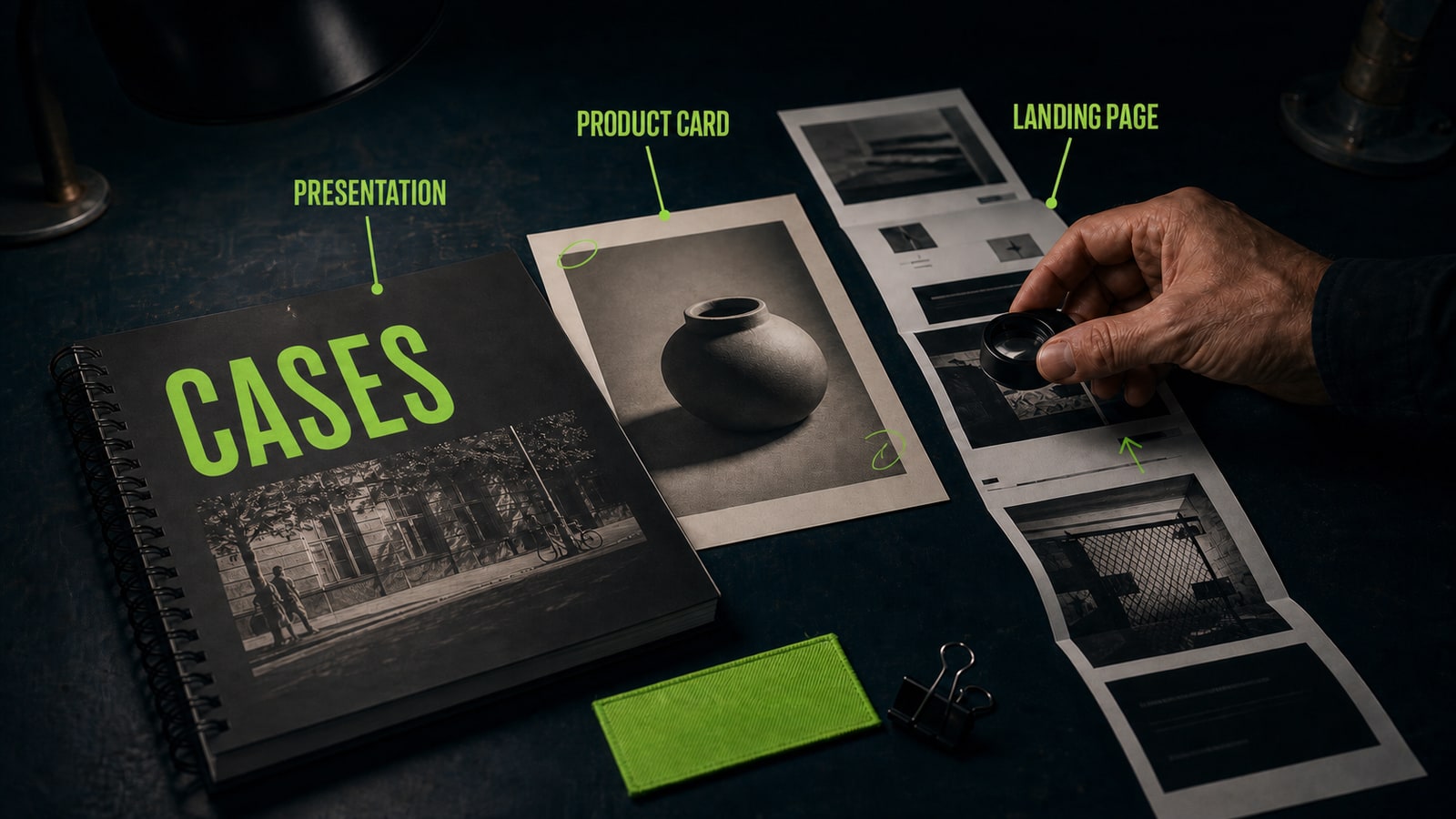
You can build a credible starter portfolio without pretending to have clients. Choose one service and create three distinct practice cases, such as a deck for a local business, a proposal for a small studio, and an internal team report. Use public or fictional inputs and label the work as self-initiated. Don’t borrow someone else’s results or present a mock project as a paid engagement. A useful case includes more than the polished final. Show the task, constraints, weak first draft, corrected prompt, finished artifact, and short review checklist. A potential client can then see how you think and what happens when the model gets something wrong. Three well-explained cases for one service carry more weight than twenty unrelated generations. Use the same structure for every case: task, inputs, your role, tools, checks, and handoff. Once paid work arrives, that template also makes real case studies faster to document.
Before
Portfolio: a gallery of polished AI images with no task or explanation.
After
Case study: task and inputs → first draft → corrected prompt → finished artifact → manual review checklist.
- 5.
Improve the prompt before generation, then review
Marina chose one offer: presentation structure and a visual draft for small businesses. Her first ChatGPT request was, “Make a presentation for a café.” It returned generic slides about comfort, quality, and a love of coffee, then filled gaps in the source material with plausible-looking numbers. She rebuilt the prompt around a landlord meeting, the goal of securing approval for a location, an eight-slide limit, a list of verified facts, and a rule to mark every gap as `[fact needed]`. She requested one conclusion, up to three supporting points, and a visual note for each slide. ChatGPT returned an outline she could review; after checking it manually, she moved the structure into Gamma for a visual draft without invented performance claims. Opten can help review a vague request before generation, restoring the audience, output format, and constraints. The freelancer still owns the final checks. A model doesn’t know whether a number is current, an image is licensed, or the delivery matches the client agreement.
Before
Make a convincing presentation for a café.
After
Create a presentation outline for a café’s landlord meeting. Goal: secure approval for the location. Maximum 8 slides. Use only the facts below; mark gaps as `[fact needed]`. For every slide, provide one conclusion, up to 3 supporting points, and one visual note.
- 6.
Find first projects through small, clear requests
Start outreach with former coworkers, business owners you know, professional communities, local groups, and marketplaces that list small jobs. Don’t send “I can do anything with AI.” Name one problem, show a closely related case, and offer one simple next step, such as reviewing the source material and returning a written scope. A message can be direct: “I create presentations of up to 10 slides from verified source material. Here’s a practice case for a local business, including the task, first draft, and final structure. If you need something similar, send the topic and materials, and I’ll outline what the project includes.” You don’t need to deliver a full unpaid project to prove interest. A bounded sample or small paid first stage is enough. Write down the deliverable, date, price, revision count, and file format. After delivery, save any portfolio excerpt the client has approved, note recurring mistakes, and update your process template. That’s how one offer becomes more reliable, rather than merely faster because it uses AI.
Before
Hi! I use every AI tool and can take on any task.
After
I create presentations of up to 10 slides from verified materials. I’ll share a related case, then return a written scope, timeline, and revision count after reviewing your inputs.


