How to make money with AI without selling hype: 7 practical paths
Vlad Voronezhtsev · · 10 min read

To make money with AI, don't hunt for a passive-income button. Start with a task you already understand, package it as a small service, build three honest examples, and take responsibility for a reviewable result. AI can speed up the draft; the value comes from scope, judgment, revisions, and quality control.
- 1.
Separate real AI income from easy-money claims
The phrase “make money with AI” often leads to promises of passive income, hundreds of automatic videos, and services that require “no skills.” Real clients don't pay for model access or a large generation count. They pay for a useful outcome: a meeting deck, five product cards, a landing-page draft, or a short ad clip. Treat AI income as ordinary service work with faster production. You still need domain judgment, good questions, fact checking, selection, and revisions. If you can't describe, show, and review the result, it isn't ready to sell. Start with the work you already understand without AI. Someone who can structure an argument may offer presentation drafts. An editor can improve copy. A designer can create visual directions. The model shortens parts of the process; it doesn't replace the professional decision.
Before
I want to learn AI and turn it into passive income.
After
I'll choose one familiar task, define a concrete result, build three practice cases, and test demand with one small paid project.
- 2.
Choose one of seven practical paths
Seven directions work well for a first AI-assisted service. One: presentation structure, slide drafts, and visual direction from approved materials. Two: editing an email, page, article, or content series. Three: landing-page structure, copy drafts, and a visual concept without promising complex production work. Four: product cards built from supplied photos and facts. Five: short AI video, including a storyboard, prompt, variants, selection, and preparation for editing. Six: client research with sources, a summary, and checked links. Seven: a content pack derived from one source such as an interview, including a post, email, short-video script, and card outline. Every path includes work beyond the model. Presentations need narrative logic, product cards need item accuracy, video needs physics and editability, and research needs source review. Pick the outcome you can judge by hand, not the most fashionable tool.
Before
I offer AI copy, websites, video, design, research, and automation.
After
My first service: five product cards from supplied photos and approved facts, with two visual directions and one revision round.
- 3.
Package the skill as a clear service
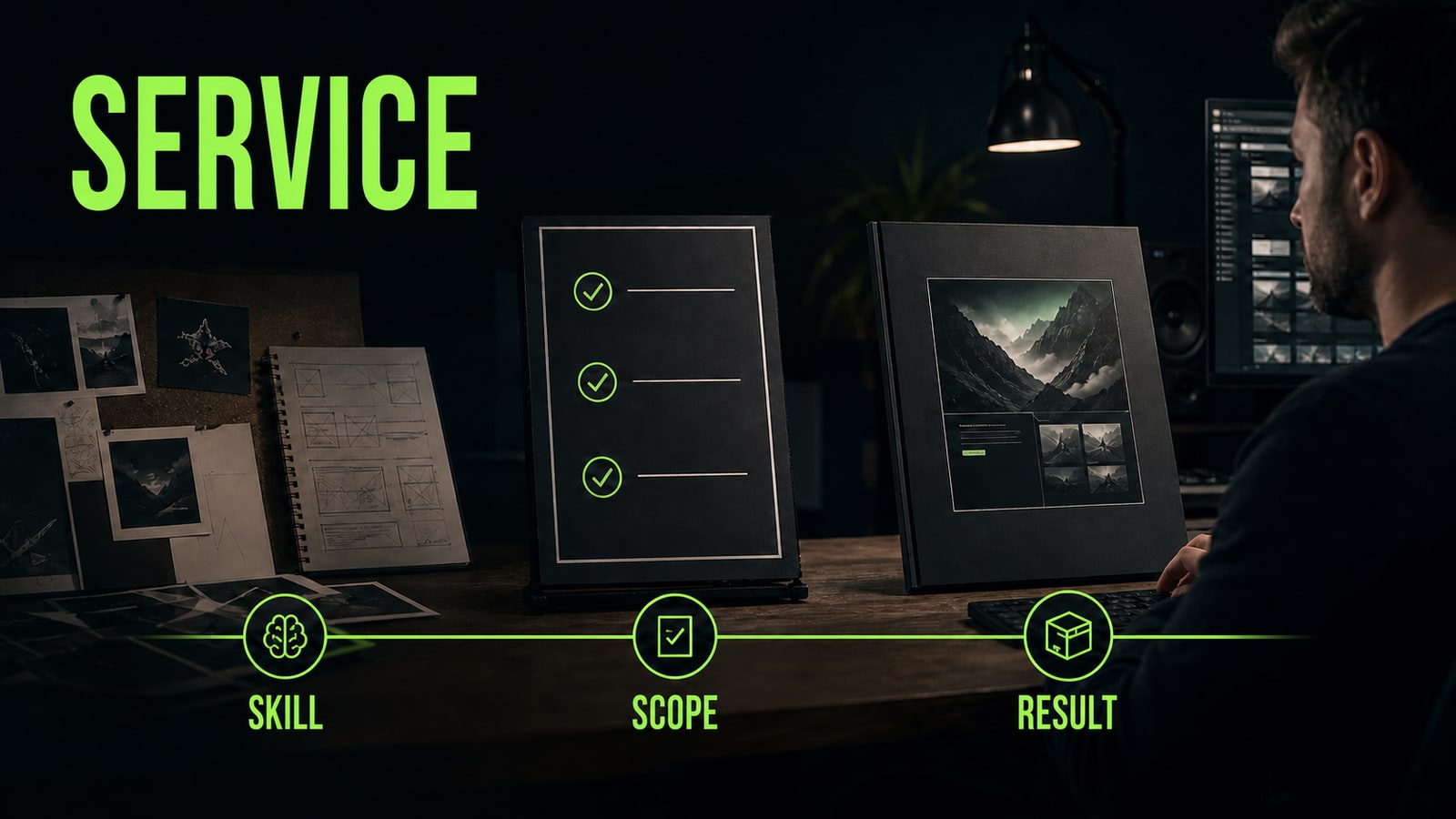
To keep extra income from turning into endless rework, define five things: result, source materials, deadline, number of options, and revision rounds. “I make content with AI” leaves all of them open. The client and freelancer will imagine different scopes and different definitions of done. A service is easier to buy when it fits in one sentence: “I'll build a presentation structure of up to ten slides from your approved facts, draft the headlines and visual direction, then complete one revision round.” The output and boundaries are visible, so price and timing can be discussed. State exclusions as well. You don't invent business metrics, approve legal claims, use unlicensed images, or connect technical features outside the agreed service. Clear limits don't weaken the offer. They protect the client and the person delivering it.
Before
I'll make any AI content quickly and handle everything.
After
I'll create 5 product cards from your photos and approved facts: 2 visual directions, one selected series, and 1 revision round. The client approves product claims.
- 4.
Build three honest cases before looking for clients
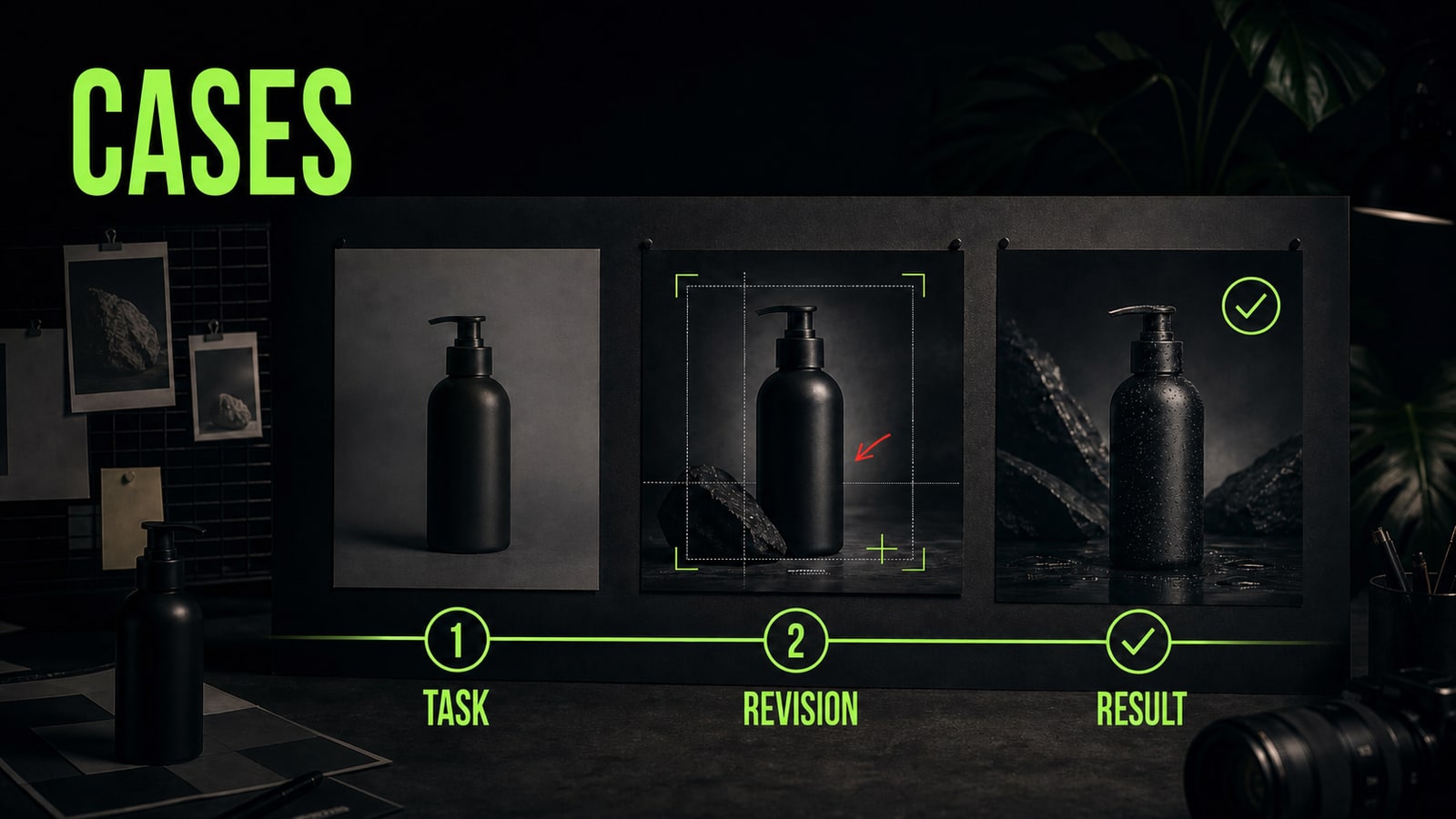
Your first portfolio doesn't need to consist of paid projects. Create three practice cases for the same service and label them honestly. For product cards, you might use a cosmetic item, a home object, and a packaged food product. For presentations, try a local business, a small studio, and an internal team report. Use your own, open, or purpose-built source material. A strong case shows more than the final image. Include the task, constraints, weak first draft, exact prompt revision, finished result, and manual review. That lets a client see how you respond when the model makes a mistake, not just how you collect lucky outputs. Three focused cases are more convincing than twenty unrelated images. They reveal a repeatable process: receive materials, clarify the job, produce options, select a direction, review the result, and deliver it in the agreed format.
Before
Portfolio: a gallery of attractive generations with no task or explanation.
After
Case: task → first draft → one precise revision → finished result → manual review.
- 5.
Qualify the lead before starting
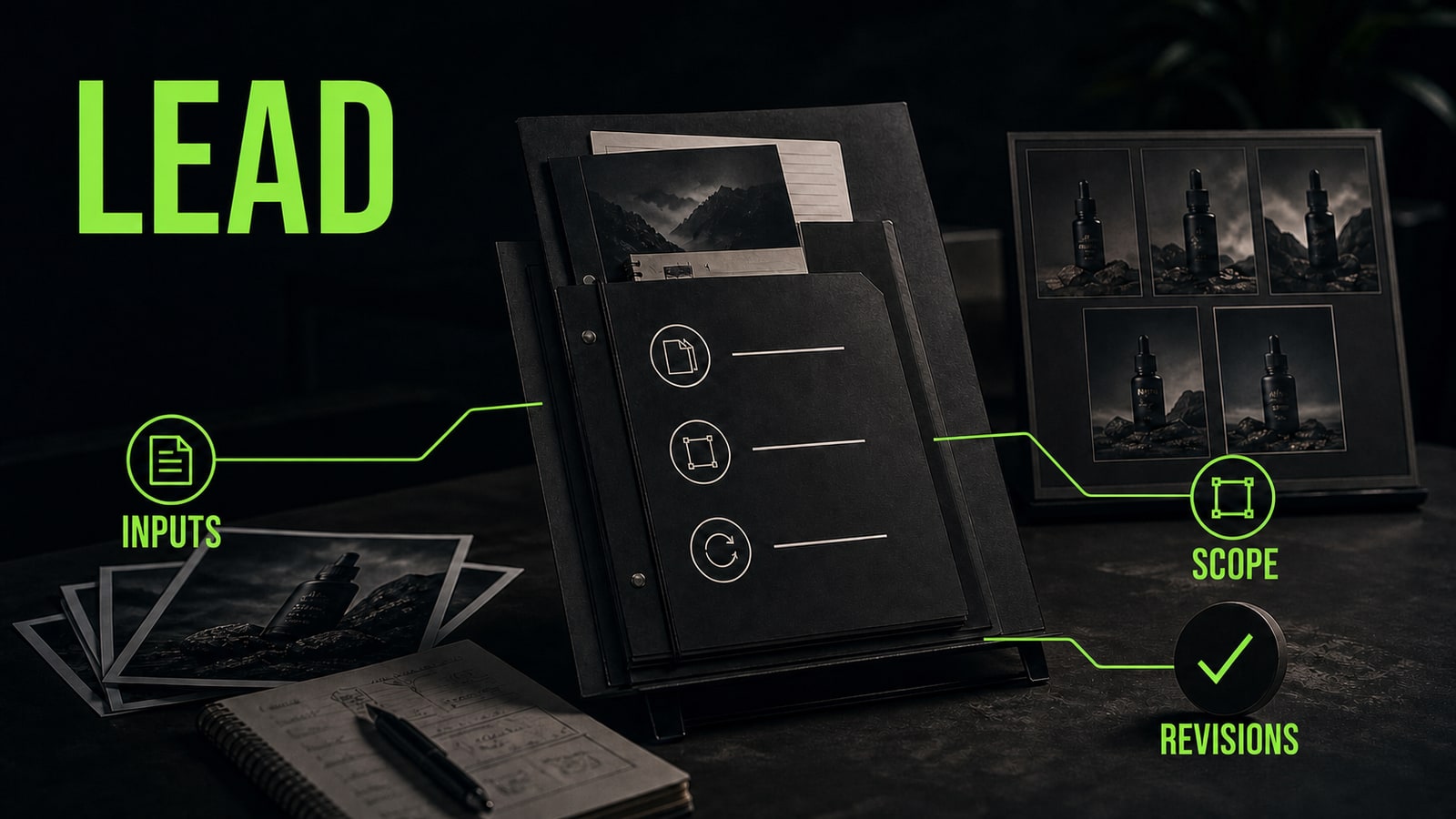
Even a small lead needs a short intake. What will the client provide: photos, copy, numbers, brand rules? What exactly will you deliver? What's the deadline, option count, and revision limit? Who approves claims and usage rights? If those questions remain open, the model fills gaps with guesses and the freelancer fills them with unpaid work. Don't quote a price from “we need five product cards” alone. One client may provide final photos and copy. Another expects photography, competitor research, product descriptions, and store upload. List the work first, then estimate preparation, generations, manual editing, communication, and export. For a first engagement, offer one small paid stage: a structure, one visual direction, or one test clip with written limits. It's more honest than completing a full project for free, and it helps both sides see whether the process fits.
Before
I'll make five cards. Send the product and we'll discuss price later.
After
Send the photos, approved claims, target marketplace, and deadline. I'll confirm 5 cards, 2 directions, 1 revision round, and the delivery format in writing.
- 6.
Start with one service, three cases, and one lead
Consider a practice case for Ilya. He chose a five-product-card service based on supplied photos and facts, using GPT Image 2 for visual drafts. His first prompt was simply, “Make premium cards for this serum.” The model changed the bottle shape, invented label copy, and mixed camera angles. The result wasn't safe to show a client. Ilya revised the prompt. He made the attached photo the only appearance source, locked the bottle and packaging, listed approved claims, assigned one function to each card, and required `[fact needed]` instead of guessing. The next pass produced five related drafts. He then checked product shape by hand, removed unsupported language, and built the final typography in the layout. The practical plan is small: choose one service, make three cases in the same format, show them to business owners you know or a professional community, and propose one limited paid task. That tests extra income through real work instead of an income promise. Opten can help restore the job, format, constraints, and review criteria before generation.
Before
Make premium cards for this serum.
After
Create visual drafts for 5 product cards for this serum. Use the attached photo as the only appearance source. Preserve bottle shape, cap, label, and color. Use only the approved facts below; mark missing information as `[fact needed]`. One function per card. Do not add claims, logos, or package text.